Photo: David McKelvey / Wikimedia Commons, CC BY 2.0
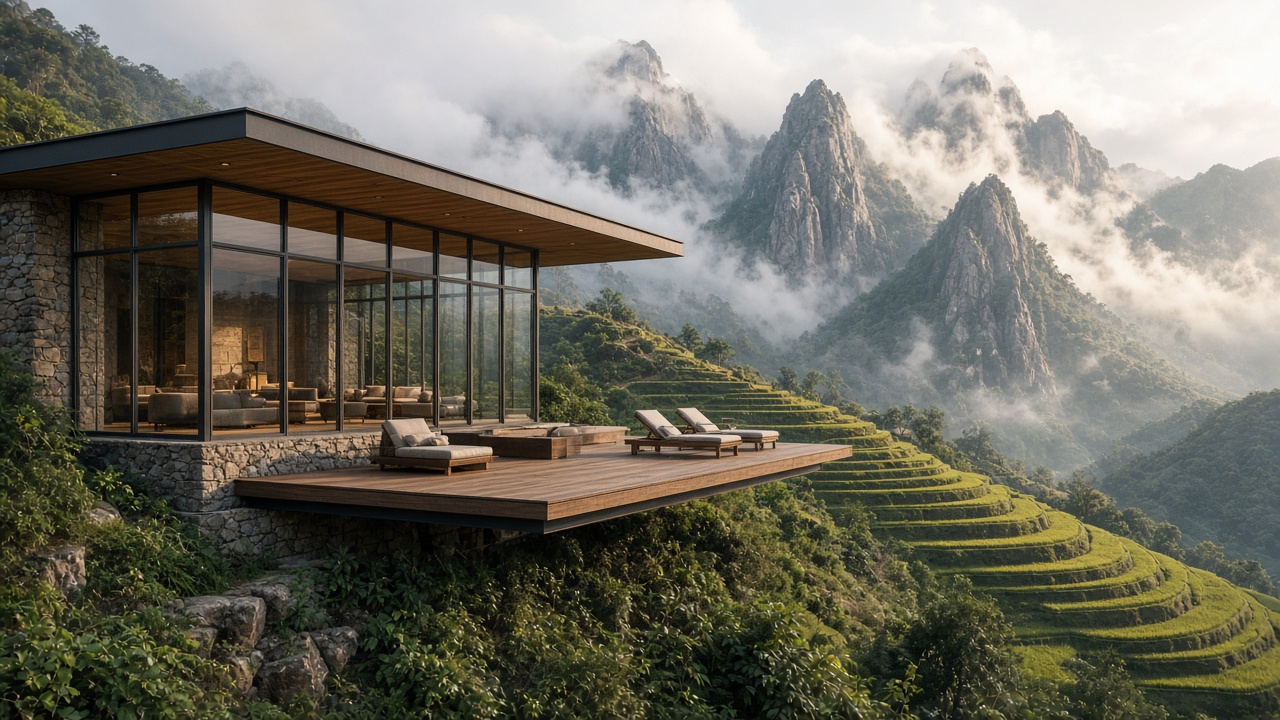
Not a five-star resort, and proud of it: on a hilltop in Hoang Lien National Park, 45 minutes from Sapa, a Danish-Vietnamese eco-lodge of 50 granite bungalows looks over one of northern Vietnam’s great valley views, and ranked No. 3 among Asia’s top resorts in the Condé Nast Traveler 2025 Readers’ Choice Awards.
The setting
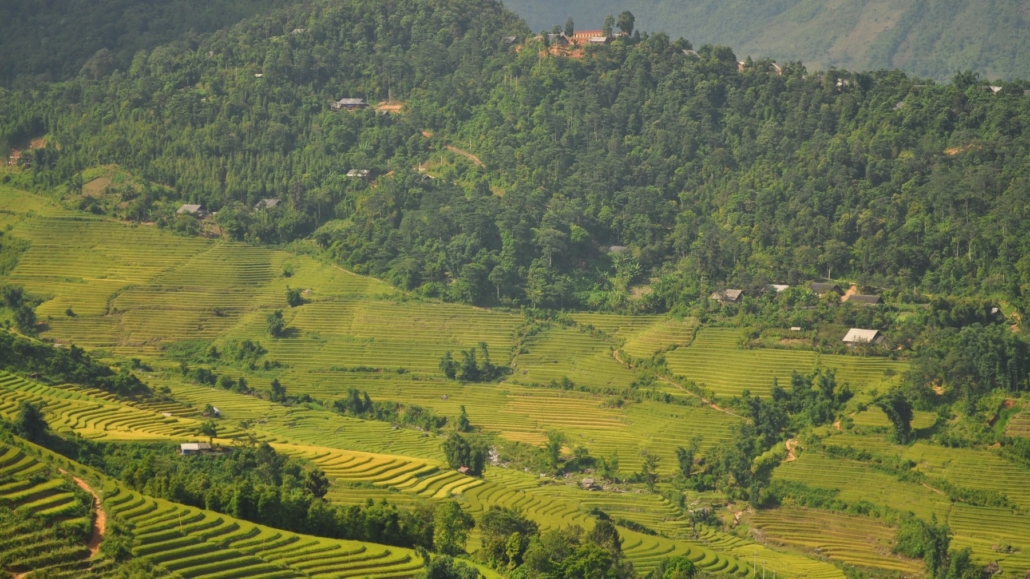
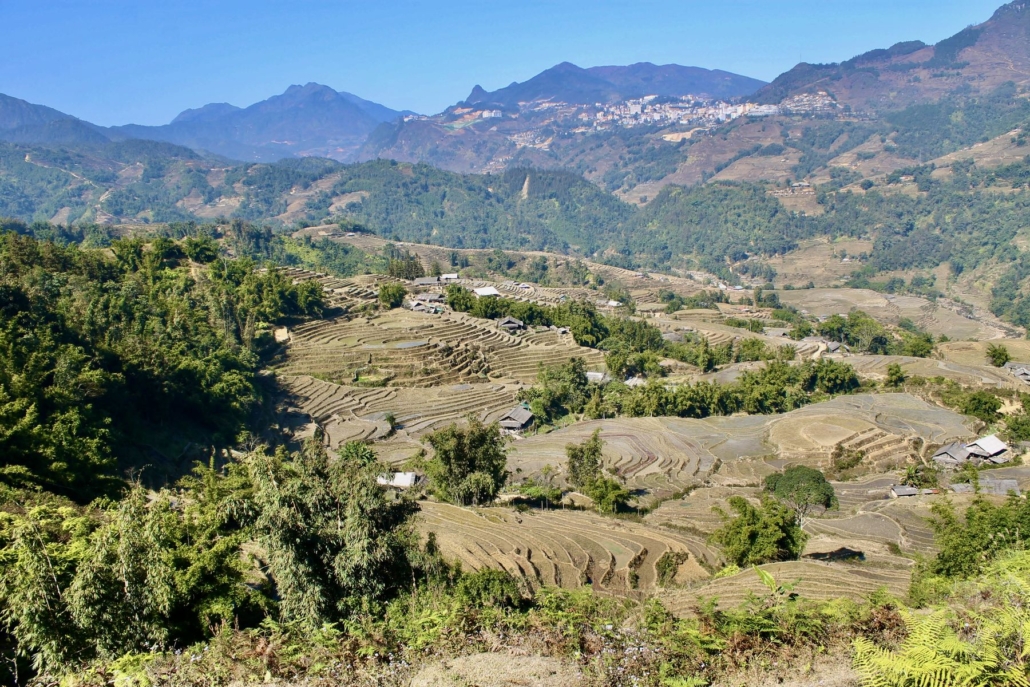
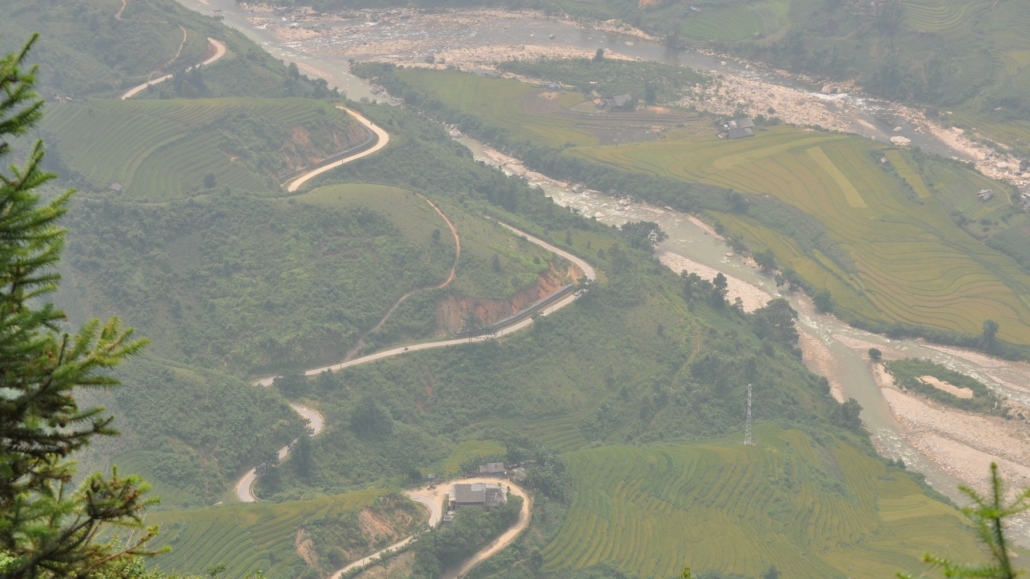
To be clear, Topas is an eco-lodge, not a five-star resort, and that is exactly its appeal. Its founders say they decided early on that “a fully serviced 5-star brand name hotel did not seem appropriate for the area”. What they built instead stands on a hilltop inside Hoang Lien National Park, 18 kilometres from Sapa. The view takes in jagged peaks, clouds that drift through the valley, and the stepped rice terraces of Thanh Kim. The lodge likes to say you can experience all four seasons here in a single day.
The story starts in 1993, when the Danish travel company Topas began exploring northern Vietnam’s mountains with a local family. That family’s son, Thien, found the site. Construction began in June 2003 and the lodge opened in April 2005, with no electricity, Wi-Fi or mobile reception. Wood would not have lasted in this climate, so the builders looked to Sapa’s stone church, which has stood since 1902, and used the same white granite. The stone was carried in by four-wheel drive and wheelbarrow, and the walls have no concrete or fake stone.
The recognition has followed. Condé Nast Traveler readers ranked Topas No. 3 among the Top Resorts in Asia in the 2025 Readers’ Choice Awards, and the lodge has been named among the Best Hotels in Vietnam by The Times.
The stone was carried in by four-wheel drive and wheelbarrow, and the walls have no concrete or fake stone.
The rooms & bungalows
All 50 bungalows and villas are built from white granite cut from the Hoang Lien mountains, and each has a private balcony facing the peaks and terraced valleys. Inside, the look is Scandinavian minimalism (neutral tones, warm timber, uncluttered space) mixed with the rustic textures of the region’s ethnic minority crafts. Bungalows can be set up with a king bed or twin beds, and wooden cribs are available for babies and toddlers.
The Premium Executive Bungalows are the originals, with sturdy stone walls and big balconies. Garden Suites are two-storey chalets with a living area and separate bedroom, good for couples or families. The newest Deluxe Suites have heated floors and sit close to the spa and pools. At the top of the range, the Pool Villas have a private eco-heated pool, underfloor heating and handmade Scandinavian furniture, and they are set apart from the rest of the lodge for privacy. Floating breakfast can be served in the villa.
Facilities are deliberately kept to a minimum. Electricity use is kept low too, as the lodge relies on the hydropower station in the valley after early attempts at solar power proved unreliable.
Eat & drink
All of the restaurants are reserved for in-house guests. Restaurant 360° crowns the first hill, with views over the Ban Ho valley, the national park and the Thanh Kim terraces. It serves Western cuisine from a circular show kitchen, including premium steaks, fresh fish and creative vegetarian dishes, with open-flame cooking and a curated wine list.
The Stilt House occupies the upper floor of a traditional Tay stilt house that was moved piece by piece and rebuilt at the lodge. It serves all-day Vietnamese dishes from the north and south, plus international plates, using produce from the lodge’s garden, its farmhouse and local markets. Downstairs, the Inn Bar channels Danish hygge, with soft lighting, board games and an open stone fireplace for roasting chestnuts and marshmallows in winter.
On selected evenings, the outdoor Pavilion hosts a Hilltop BBQ under the stars, cooked by a head chef from Lao Cai; it must be reserved in advance.
Wellness
The two saltwater infinity pools are built into the mountainside to echo the rice terraces below. The upper pool is heated year-round with an energy-efficient system, has a shallow section for children, and sits beside a fully stocked pool bar. A staircase leads down to the lower pool, an adults-only quiet zone with cool water and a bubbling jacuzzi.
Close by, the Rice Spa combines ancient knowledge, local materials and modern techniques. Its signature is the traditional Red Dao herbal bath, a mountain remedy and a perfect way to soothe legs after a day on the trails, alongside massages, organic facials and wraps.
Beyond the lodge
This is hiking country, and the lodge is a comfortable base for exploring it. Guided treks lead to Red Dzao villages such as Lech in Thanh Kim commune, and through the remote corners of Hoang Lien National Park on terraced trails. The lodge’s mountain bikes cover a 7-kilometre half-day circuit. In Lao Chai, Black H’mong artisans introduce hemp, batik and indigo dyeing.
Further afield, the Fansipan cable car climbs to the summit of mainland South-East Asia’s highest peak, at more than 3,100 metres. On Sundays, Bac Ha Market brings together Flower H’mong, Phu La, Black Dzao, Tay and Nung traders in what the lodge calls the largest ethnic minority market in northern Vietnam.
When to go
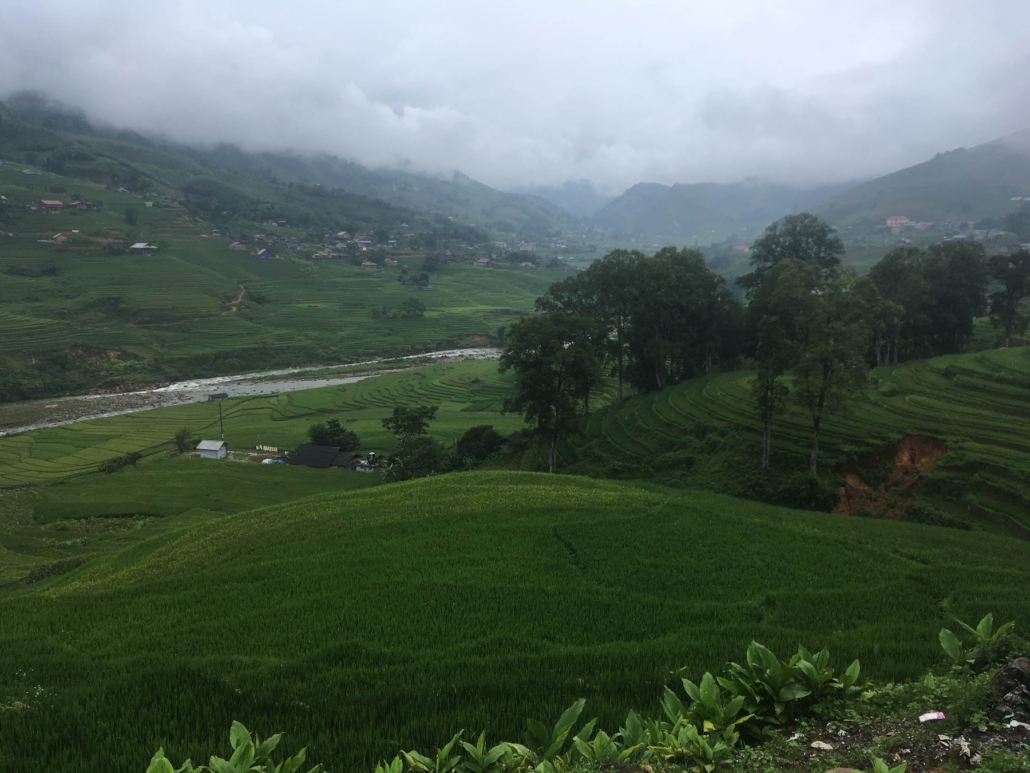
Sapa’s mountain climate brings real seasons. Spring (roughly March to May) and autumn (September to November) bring the most comfortable hiking weather. The rice terraces are green through the summer and usually turn gold just before the harvest, around September. Summer (June to August) is the rainy season, when trails can be muddy. Winter (December to February) is cold and often misty, with occasional frost on the highest peaks. That is when the heated upper pool, the heated floors in the Deluxe Suites and the fireplace in the Inn Bar come into their own.
Who it’s for
Topas is for travellers who want the mountains first and the comforts second: hikers, cyclists, photographers, families with older children and couples who are happy to swap room service for a balcony full of cloud. Its community credentials are real. The lodge employs around 100 people, almost all from local villages, trains them in English and hospitality, and is the main sponsor of the local school. It also runs a constructed wetland for wastewater, a glass crusher for bottles, and rainwater and greywater systems in the bungalows.
It is not for anyone who wants five-star polish or easy access. The road from Sapa can be rough, the weather can turn fast, and many staff are still building their English, which the lodge itself asks guests to be patient about.
This guide was researched independently from published sources; Cosmopolitan Courier was not compensated.