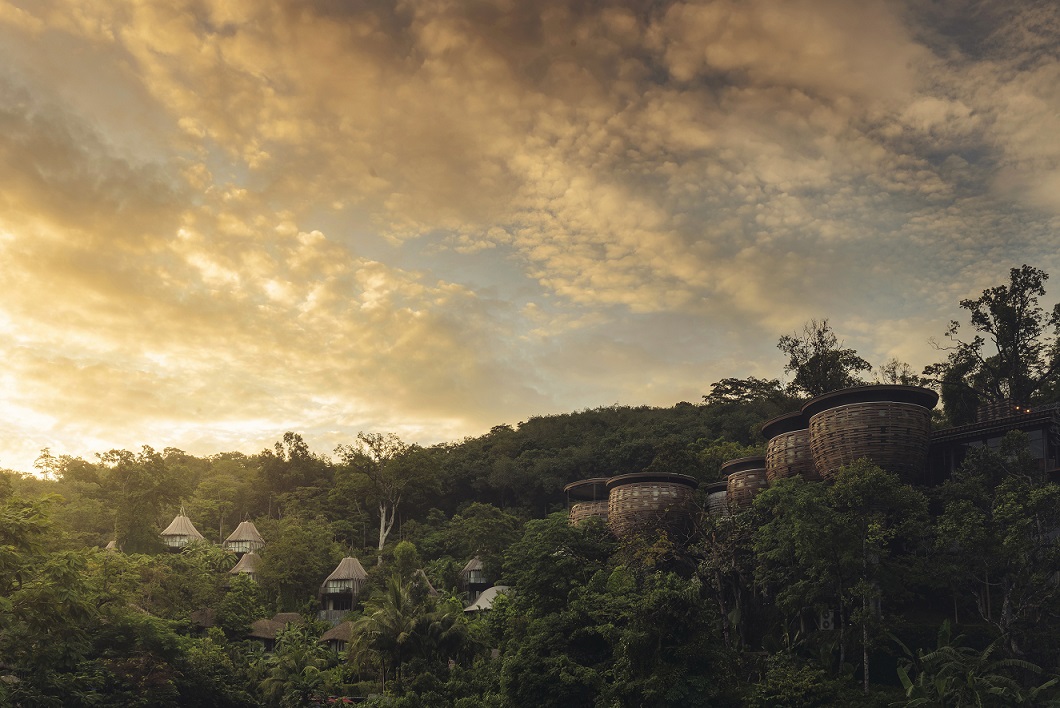
High in the rainforest above Kamala, two Phuket-born siblings have built 38 pool villas inspired by four imagined clans, from clay cottages to woven bird’s nests, and earned Two MICHELIN Keys for one of Thailand’s most enchanting retreats.
The setting
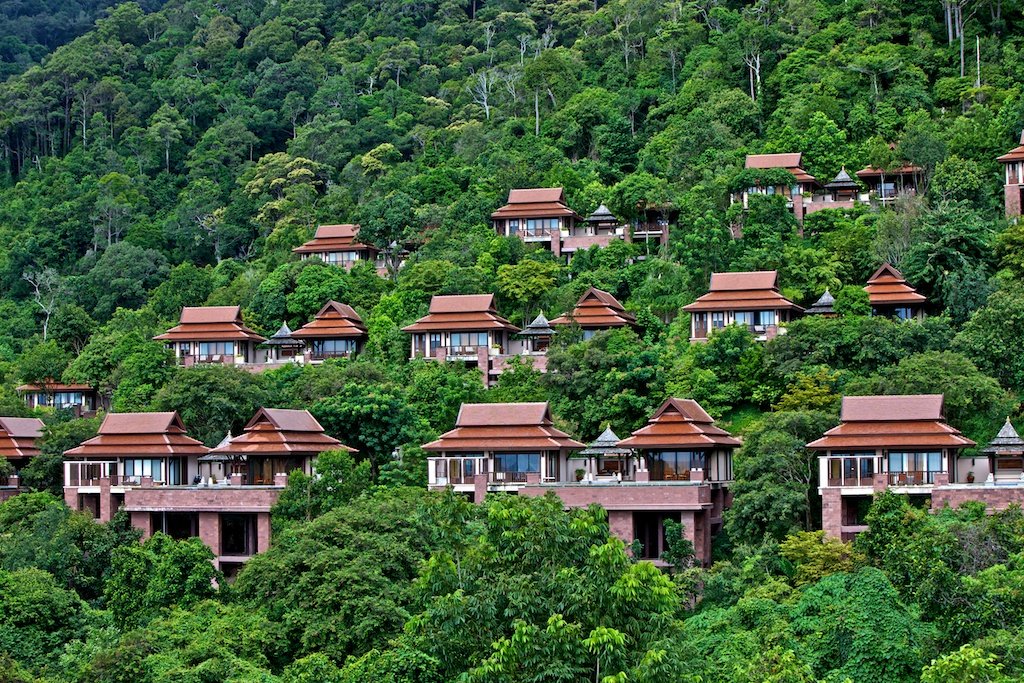
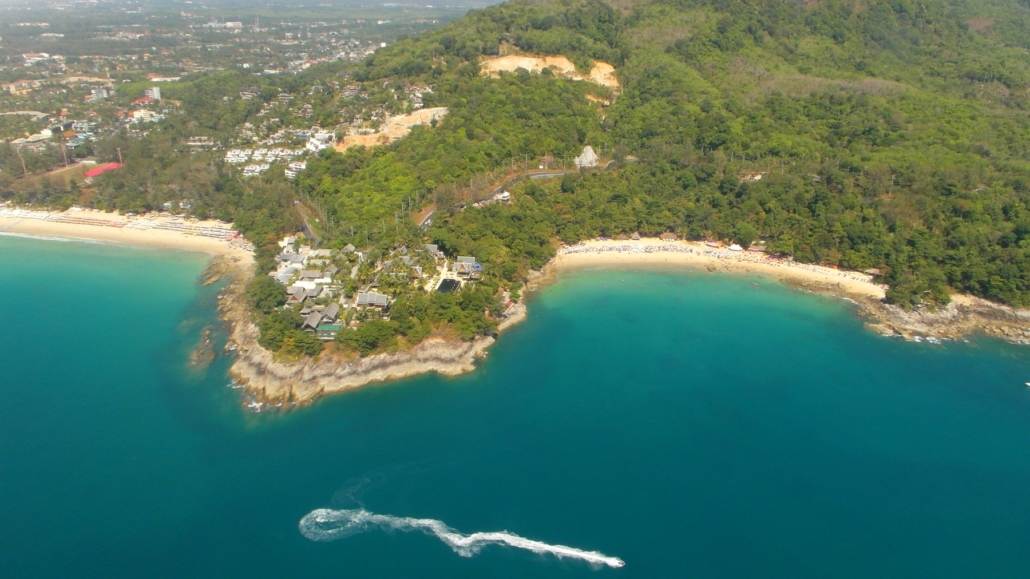
Phuket is better known for its beaches than its forests, but the island is largely mountainous, and that green interior is where Keemala has made its home. The resort sits on a lush hillside overlooking Kamala village and the Andaman Sea. It is close enough to the beach and the energy of Patong, yet wrapped in rainforest and linked by winding jungle paths.
It opened on 1 December 2015 and is a family affair. Siblings Samornpun (“Tarn”) and Tanapong (“Note”) Somnam, whose family has been in Phuket for four generations, built it together. In an interview with Two Keys, Samornpun describes the pair as complementary: one more creative and focused on guests, the other grounded in planning and operations.
What makes Keemala unlike anywhere else is its story. The design is inspired by a fictional legend of four clans who sailed the ancient Sea Silk Road, were shipwrecked in a storm and settled on the island now called Phuket. Each clan inspired a style of villa, and their imagined beliefs and rituals run through the spa menu and the kitchen. The MICHELIN Guide, which awards Keemala Two Keys, calls it an “all pool villa wonderland”, using the resort’s own phrase.
The rooms & villas
Every one of the 38 villas has its own pool, and each type belongs to one of the clans.
The Clay Pool Cottages honour the Pa-Ta-Pea, or Earth clan, with organic curves and earthy textures, set beside a stream. The Tent Pool Villas, for the nomadic Khon-Jorn, are crafted from canvas so you can hear the rainforest around you. Each measures 140 square metres including the pool and outdoor space, with a monsoon shower, an outdoor shower and a freestanding bath. The MICHELIN Guide notes their “striking oval soaking tubs perched high over the greenery below”.
The Tree Pool Houses, for the star-gazing We-Ha clan, rise over two floors, with cocoon-shaped beds and furniture suspended from the ceiling (169 square metres). The signature Bird’s Nest Pool Villas, for the artistic Rung-Nok, wear a woven exterior. They are the largest at 185 square metres, with sea, rainforest and resort views. A Spa Sanctuary Villa, in the clay style, adds a separate retreat room for private massage, yoga or meditation.
“striking oval soaking tubs perched high over the greenery below”
The MICHELIN Guide lists Egyptian sheets, bathtubs, minibars stocked with complimentary drinks and snacks, and private terraces with outdoor showers. Breakfast can be brought to your villa.
Eat & drink
Keemala’s kitchen calls its approach Pure Gastronomy. The resort’s Enchanted Garden grows the herbs at the heart of Thai cooking, from basil and chilli to galangal, lemongrass and kaffir lime, alongside mango, rambutan, mangosteen and bananas, mushrooms from the garden’s mushroom hut and hydroponic lettuce.
Mala, the all-day restaurant, serves Southern Thai, Western and Indian dishes, with a strong thread of healthy, raw and vegetarian options. Next door, the Mala Bar handles cocktails and coffee. For something more intimate, Destination Dining sets a private dinner for two somewhere romantic on the property, with signature menus spanning Thai, Southern Thai, Indian, Western and seafood. Cooking classes take place in the Enchanted Garden itself, among the herbs you will be cooking with.
Breakfast pairs a curated buffet with à la carte dishes, from fresh fruit, juices and pastries to Asian specialities, eggs, smoked salmon and a glass of prosecco. The resort is happy to cater for vegetarian, vegan, gluten-free, dairy-free and raw diets with notice.
Wellness
Wellness is the point of Keemala rather than an add-on. Mala Spa sits at the resort’s heart, surrounded by flowing water. It has eight spacious couples’ treatment rooms, a sauna, a steam room, an aromatherapy bath and an outdoor rain shower. Treatments draw on Ayurvedic elements (water, earth, fire, air and ether), and signature rituals are inspired by the four clans. Products come from VOYA, Siam Botanicals and SpaRitual.
A rolling schedule of yoga, meditation, personal training, aqua fitness and tai chi runs through the week, alongside holistic retreat programs and a Healthy Living menu of organic salads, light dishes and fresh juices.
Beyond the resort
A complimentary shuttle runs down to Kamala Beach during the day, and local taxis wait outside. Beyond that, your villa host can tailor your days on the island: Phuket Old Town and its heritage streets, island hopping across the Andaman, a zipline through the jungle, or the island’s beaches, which change character with the seasons. The resort encourages environmentally responsible tours.
When to go
Phuket’s weather follows the monsoons. Roughly November to April is the dry, sunny and most popular stretch, with calm seas for boat days. From about May to October, the south-west monsoon brings tropical showers, which are often short, and livelier seas. Keemala’s hillside setting comes into its own in the green season, when the rainforest is at its most vivid and the sound of rain on the canopy is part of the experience. Phang Nga Bay trips run year-round, though seas are calmer in the dry months. Keemala’s own guidance notes that the livelier seas of the wet season make it a popular time for surfing on Phuket’s west coast.
Who it’s for
Keemala is for travellers who want their holiday to feel like a story: couples, honeymooners and friends who love design with imagination, and anyone drawn to a wellness stay that does not feel clinical. The four villa types make it a place to choose carefully. The Tree Pool Houses suit friends travelling together, while the Bird’s Nest villas are the showpieces.
It is less suited to those who want to step from villa to sand, as there is no private beach. Families should note there is no kids’ club or children’s pool, and not every villa type suits young children. The hillside setting also means plenty of slopes and steps.
This guide was researched independently from published sources; Cosmopolitan Courier was not compensated.